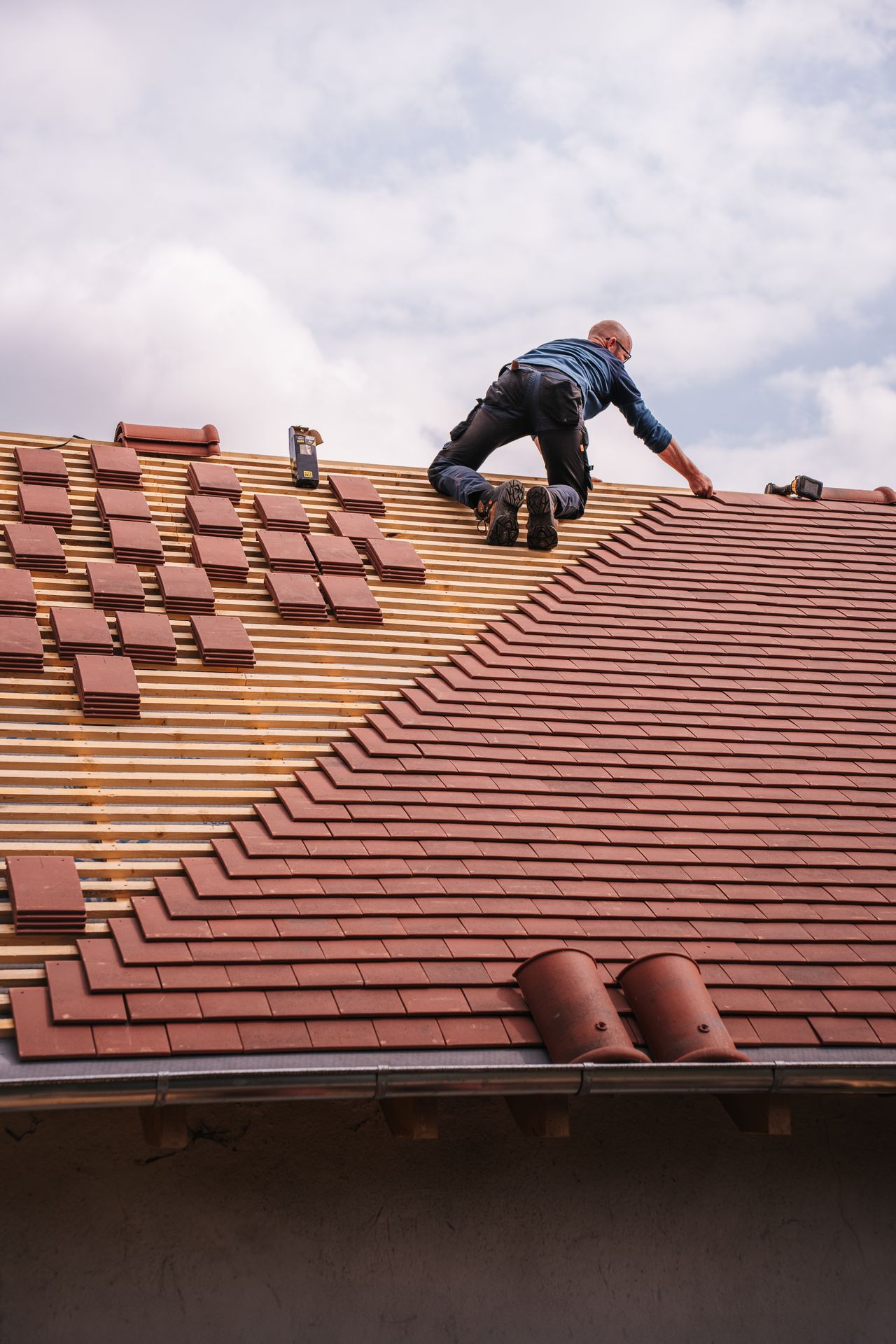
Roofing marketing measured in roofs, not rankings.
Roofing has the widest lead-cost spread of any trade — anywhere from $50 to $130 on Local Services Ads, and about $124 on non-branded Google Ads. Whether those numbers work for you depends entirely on your ticket, your margin and your close rate. We start there, then build the search, ads and storm response around what your arithmetic can actually carry.
Source: SearchLight Digital contractor advertising benchmarks, January–February 2026, drawn from $6.72M in tracked Local Services Ads spend across 888 contractors and $14.9M in Google Ads spend across 816. National averages — storm markets and dense metros move these substantially. We publish sources because a number without one is just a claim.
Why is marketing for roofers different from every other trade?
Because roofing demand arrives in two completely different shapes and most agencies only build for one. There is planned replacement, where a homeowner has known for two years the roof is tired and finally starts researching. And there is storm demand, where an entire zip code needs a roof in the same week and out-of-state crews arrive within days. A campaign built for one performs badly at the other.
The widest cost spread in the trades
No other trade swings like roofing. Local Services Ads run $50 to $130 depending on market, and non-branded search averages $124 while your own company name averages $44. That gap is the entire argument for brand building: every homeowner who searches your name instead of "roofer near me" costs you roughly a third as much to acquire.
Demand arrives in bursts
A hailstorm can generate more qualified demand in one afternoon than a normal quarter. Flat monthly budgets miss it entirely, and by the time a standard agency approval cycle raises your caps, the neighbourhood has already signed with whoever knocked first. Roofing budgets need a trigger, not a schedule.
You compete with people who leave
Storm-chasing crews arrive after events, bid up click costs, take deposits and move on. You are competing on price against companies with no local reputation to protect. Your advantage is permanence, and marketing that fails to make permanence obvious throws that advantage away.
Two customers, two vocabularies
An insurance restoration customer wants to know you handle adjusters and paperwork. A retail replacement customer wants warranty, financing and what it will look like. The same page cannot reassure both, and copy aimed at one reads as noise to the other.
High ticket, high stakes, high research
A roof replacement is one of the largest unplanned purchases a homeowner makes. They will read reviews, check licensing, ask neighbours and look you up by name before calling. Trust signals do more work in roofing than in almost any other trade.
Seasonality on top of everything
Most markets have a roofing season, and demand, competition and click costs all rise together inside it. The efficient move is spending in the weeks before the season rather than during the peak, when you are bidding against everyone else at once.
What does a roofing lead actually cost in 2026?
Between roughly $44 and $124 depending on the channel, with Local Services Ads landing in the middle at $50 to $130 by market. Organic search costs nothing per lead once it ranks, which is why it is worth building underneath the paid channels rather than instead of them. Every figure below carries its source.
| Channel | Cost per lead | Speed | What it is good for |
|---|---|---|---|
| Branded search | ~$44 | Immediate | Defending people who already know your name. The cheapest paid leads you will ever buy, and the reason brand recognition compounds into lower blended costs. |
| Local Services Ads | $50–$130 | Days | Pay per lead rather than per click, sitting above the regular ads. Usually the first channel we switch on for a roofer, with a 43.9% book rate across trades. |
| Non-branded Google Ads | ~$124 | Days | Reaching homeowners who do not know you yet. The most expensive channel, and the one that gets cheaper as your brand and quality score mature. |
| Google Business Profile & map pack | $0 direct | 30–90 days | The highest-return free asset in local roofing. Category, reviews, photos and service area decide whether a homeowner three miles away ever sees you. |
| Organic search | $0 direct | 4–8 months | No cost per lead once it ranks. Slow to arrive, then compounding — the reason month twelve costs less per booked job than month three. |
| Shared marketplace leads | Varies | Immediate | Sold to several roofers at once, which starts the conversation as a price fight. Useful as a stopgap for cash flow, poor as a strategy. |
Sources: SearchLight Digital contractor advertising benchmarks, January–February 2026. National averages across tracked contractor spend. Your own market, season, review count and quality score will move these meaningfully — in storm markets, dramatically. Treat them as orientation and replace them with your own tracked numbers as soon as you have ninety days of data. The free lead tracker is built for exactly that.
How many roofs does your revenue target actually need?
Most roofing budgets are set by guessing at a number that feels affordable. This works the other direction: start with the revenue you want, and it tells you how many roofs, how many leads and what that costs at real 2026 roofing prices — then whether it clears your own break-even.
Roofing Revenue Planner
AFC · No. 004
Runs in your browser. Nothing is stored or sent. Lead costs are 2026 national averages from SearchLight Digital — your market will differ. The 6–12% of revenue band is published guidance for healthy home-services marketing spend.
What should a roofer do in the 72 hours after a storm?
Execute a plan you wrote months earlier. The window is days, not weeks, and everything that needs building — landing pages, ad copy, geographic targeting, budget approval — takes longer than the window allows. Roofers who win storm markets are not faster improvisers. They are the ones who prepared while it was quiet.
Write the playbook and build the page
A storm damage landing page live and indexed months in advance, so it already has authority when it matters. Pre-written ad copy sitting paused in the account. A geographic radius you can tighten to specific zip codes in minutes. A page built the day after a storm ranks for nothing. A page built six months earlier ranks immediately.
Tighten the radius and lift the caps
Narrow targeting to the affected zip codes rather than your whole service area, and raise budget caps you agreed in advance. Broad targeting during a localised event burns money on homeowners with intact roofs. Precision beats volume in the first day, and the roofers who lose money on storms usually lost it here.
Answer the phone, then answer it again
This is the entire ballgame. Homeowners call several roofers in a row and hire whoever picks up. If your team cannot cover the volume, arrange overflow before the season, not during the storm. No ranking, ad or landing page survives an unanswered phone — and with agentic booking rolling out through 2026, in some categories the assistant itself calls and moves on if nobody answers.
Make local permanence obvious
Out-of-state crews will be knocking doors in the same neighbourhood. Your advantage is that you will still exist in five years when the warranty matters. Say it plainly — years in the market, local address, license number, review history, jobs done on nearby streets. Homeowners are actively worried about storm chasers. Answer the worry before they raise it.
Convert the researchers, not just the panickers
The first wave calls immediately. A larger second wave waits, gets three quotes, talks to the insurance company and decides weeks later. Retargeting, follow-up sequences and a genuinely useful insurance-claims explainer capture that group. Most roofers stop advertising when the urgency dies down, which is exactly when the deliberate buyers start deciding.
If you want to see historical storm frequency for your market before deciding how much of your strategy should be storm-dependent, NOAA publishes it publicly — the National Centers for Environmental Information maintains searchable storm event records, and the Storm Prediction Center publishes current outlooks. Both are worth an hour before you build a business plan around hail.
Should insurance and retail roofing have separate campaigns?
Yes, and treating them as one is among the most common mistakes we see on roofing websites. The customers are in different emotional states, searching different phrases, with different anxieties and different timelines. One page trying to speak to both ends up speaking convincingly to neither.
Insurance restoration
The homeowner did not plan this expense and is anxious about the claim more than the roof. Their real question is whether you will make the process painless.
- Searches: storm damage roof repair, hail damage inspection, roof insurance claim help
- Wants: someone who deals with adjusters and knows the paperwork
- Fears: being taken advantage of while stressed, and storm chasers
- Timeline: fast, but gated by the insurance company
- Content that works: claims process explainers, inspection walkthroughs, what is covered
- Proof that works: local longevity, license, and jobs on nearby streets
Retail replacement
The homeowner has known for a while and is finally acting. They are comparing quotes, materials and finance options over weeks.
- Searches: roof replacement cost, best roofing company plus city, metal vs asphalt roof
- Wants: clear pricing, material options, warranty and finance terms
- Fears: overpaying, and a bad job they live with for twenty years
- Timeline: weeks to months, often with a spouse involved
- Content that works: cost guides, material comparisons, galleries, financing pages
- Proof that works: photo galleries, warranty detail, and reviews mentioning finish quality
In practice that means separate landing pages, separate ad groups, and separate keyword sets — and it means your site architecture should have a page for roof repair and another for roof replacement rather than one combined services page. That single split is often the highest-return structural change available to a roofing website.
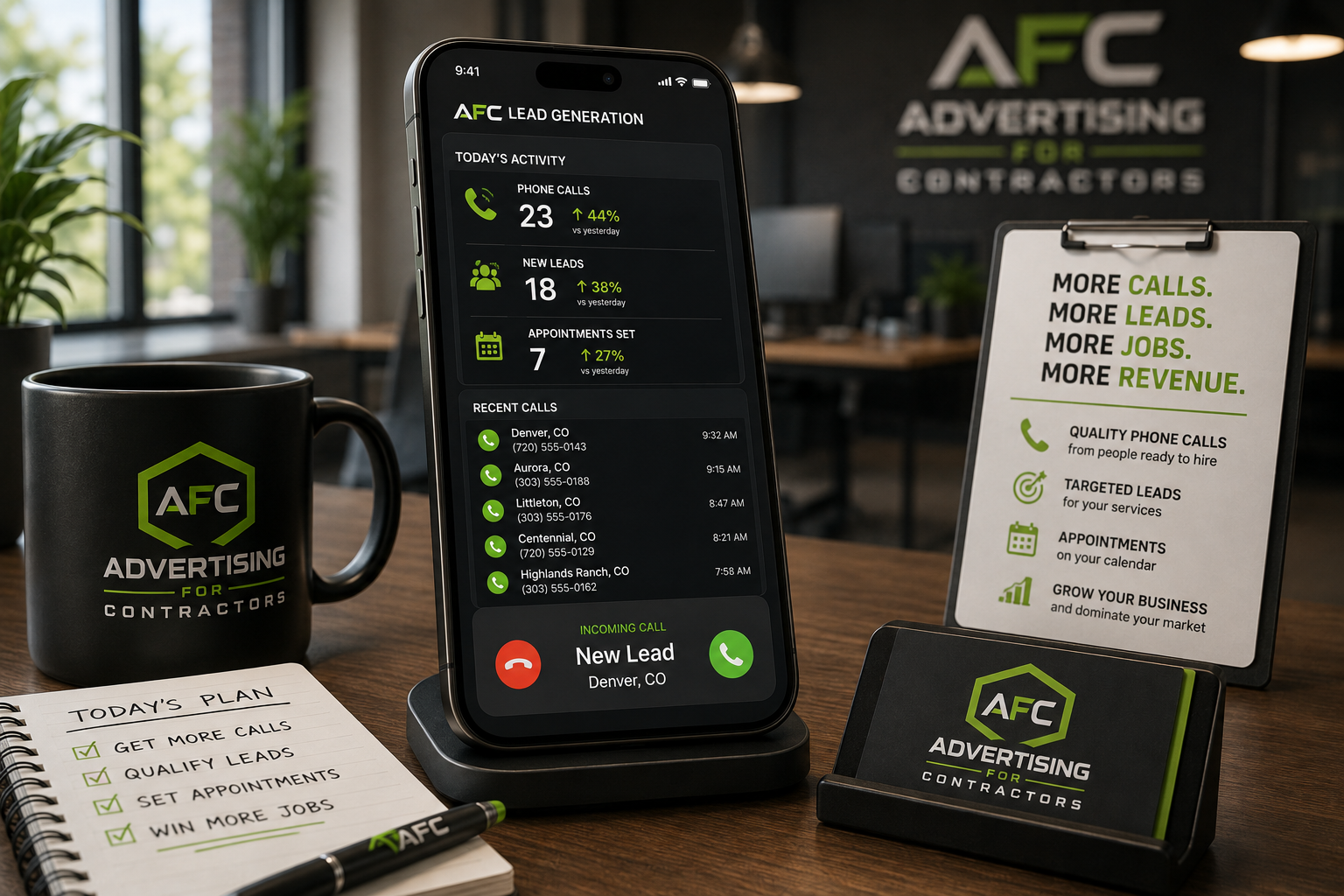
A $44 branded lead and a $124 cold lead buy the same roof.
The difference is whether the homeowner already knew your name when they searched. That is what brand building actually buys a roofing company — not awareness for its own sake, but a permanent reduction in what every future job costs to acquire. It is slow, it is unglamorous, and it is the reason established local roofers out-earn better-funded newcomers.
Get a free roofing auditWhat does roofing SEO and advertising actually involve?
Five things, sequenced rather than switched on at once. Google Business Profile and the map pack first because it is free and highest-return. Then whichever paid channel clears your break-even. Then the site architecture and content that ranks. Then storm readiness. Then AI search, which mostly falls out of doing the rest properly.
Google Business Profile & the map pack
The single highest-return asset a roofer owns, and most profiles are half finished. Correct primary category, every service listed, real photos of your crews on real roofs, accurate service area, and a review habit that produces a steady trickle. Movement usually shows in 30 to 90 days. Google's own Business Profile help centre documents the setup if you would rather do it yourself.
Local SEO for contractors Step 02 · Work this monthLocal Services Ads & Google Ads
License and insurance verification, category setup, and the lead disputes most roofers never file — which is precisely why their effective cost per lead runs above the benchmark. Note that Google Guaranteed was renamed Google Verified in October 2025, so older guides give the wrong name. Google documents the programme at Local Services Ads help.
Google Ads for contractors Step 03 · CompoundingSite architecture & content that ranks
Separate pages for repair and replacement, one page per priority city with genuinely local content, and the cost guides and material comparisons retail buyers actually search for. Competitive terms take four to eight months, which is why this starts underneath paid rather than instead of it.
Contractor SEO Step 04 · Prepared, not improvisedStorm readiness
The landing page live months early, the ad copy written and paused, the radius and budget triggers agreed in advance, and a response plan your office already knows. Built while it is quiet, deployed in hours.
See the storm playbook Step 05 · The new front doorAI search visibility
Homeowners now ask ChatGPT and Gemini to recommend a roofer. Research in 2026 estimates only about 1.2% of local businesses surface in those answers, while AI-sourced visitors convert at roughly 14.2% against 2.8% from traditional search. The qualifying work overlaps almost entirely with good local SEO and structured data.
AI search optimization Underneath all of itTracking & lead handling
Call tracking per channel before a dollar goes out, instant lead alerts to a phone rather than an inbox, and follow-up that fires whether or not anyone remembers. Without this you cannot tell which channel produced the work, and every later decision is a guess.
Lead generation systemsWhere should a roofing company get independent information?
Not from a marketing agency, on most subjects. These are the primary sources we use ourselves, and none of them are paying us to say so. If you only read one, make it the NOAA storm records for your own county before you build a business plan around hail.
NOAA storm event records
Searchable historical storm and hail data by county. The honest way to find out whether your market is genuinely storm-driven or whether that is just how it feels after one bad year.
National Roofing Contractors Association
The trade body. Technical standards, industry guidance and training. Membership is also a credibility signal worth displaying on your site if you hold it.
Insurance Institute for Business & Home Safety
Independent research on roofing performance, impact-resistant materials and fortified standards. Genuinely useful material for educating retail replacement customers.
U.S. Small Business Administration
Free business counselling, financing guidance and local assistance offices. If your constraint is capital or crew rather than leads, this is a better first call than any agency.
Google Business Profile help
The authoritative documentation for the free asset that matters most in local roofing. If you want to do the profile work yourself, everything you need is here.
Google Search Central
Google's own documentation on how search works, what structured data does, and what actually violates the guidelines. The antidote to most SEO folklore you will be told.
Roofing marketing questions
How much does SEO for roofers cost?
What is a good cost per lead for a roofing company?
How long does roofing SEO take to work?
Is Google Local Services Ads worth it for roofers?
How do I market a roofing company after a storm?
Should roofers buy leads from Angi or storm lead brokers?
Do I need separate pages for roof repair and roof replacement?
What about insurance restoration versus retail roofing?
How many Google reviews does a roofing company need?
Will AI search send roofing customers my way?
Find out what your roofing market actually costs
We'll audit your website, your Google Business Profile, your review profile and the roofers currently beating you in the map pack — then tell you what it would realistically take to displace them, and whether it is worth it.
About a day to turn around. You keep the findings whether you hire us or not, and there is no obligation attached. If we already work with a roofer in your service area, we will say so on the first call rather than take the account.
Prefer to talk? 1-800-481-8638 — a person answers.
Request your free roofing audit
No cost, no contract, no pitch deck.
Let's get your phone ringing.
One call. We'll look at your roofing market, tell you what it takes to win it, and give you a real number. If it isn't worth it, we'll say so.